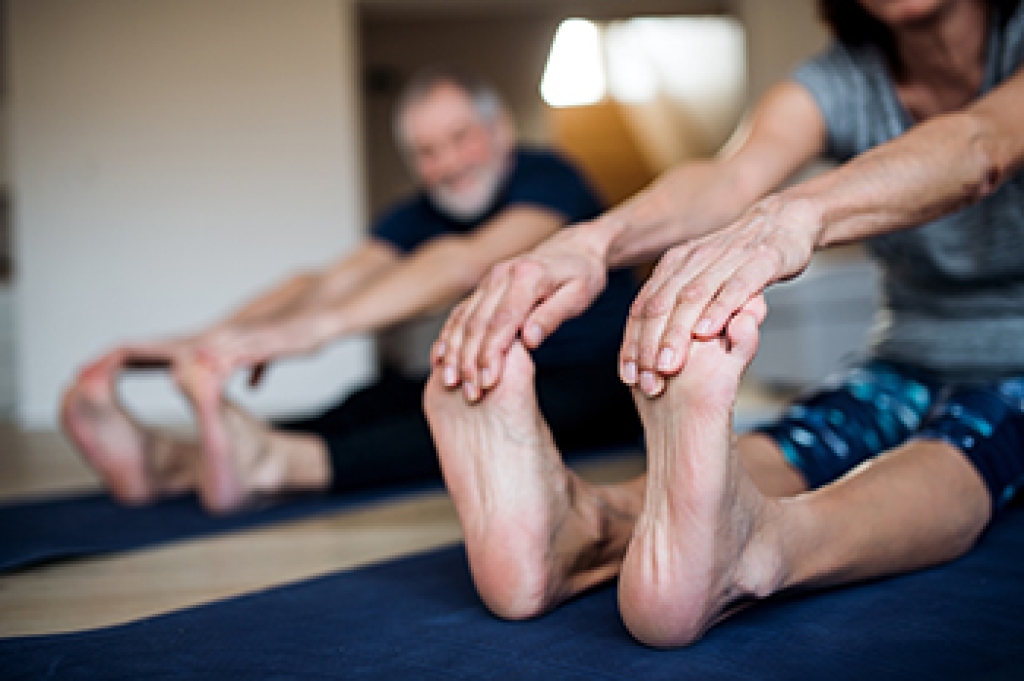
Stretching the Feet Is Important to Maintain Flexibility

The feet are often referred to as the foundation of the body. Unfortunately, they can undergo stress throughout the day from completing daily activities. Research has shown it can help to keep the feet limber when stretching techniques are frequently performed. Many stretches take a few minutes to complete, however the benefits are worth the wait. When the calves are stretched it often positively affects the heel and the bottom of the foot and their flexibility. This can be accomplished by sitting down with your feet stretched out before you, slightly grabbing the toes if you are able, all while keeping the toes in an upward position. then you can rest and repeat. Another great stretch is accomplished when a towel is placed around the feet, and you gently pull the feet toward you. Many patients enjoy the benefits of performing a foot roll. This is done by rolling the sole of the foot on a tennis or golf ball, and an effective stretch can be felt in the entire foot. There are numerous foot stretches that can be practiced daily, and it is suggested that you consult with a podiatrist if you would like to learn more on how to implement new stretches into your daily routine.

Stretching the feet is a great way to prevent injuries. If you have any concerns with your feet consult with James P. Huish, DPM from Arizona. Our doctors will assess your condition and provide you with quality foot and ankle treatment.

Stretching the Feet

Stretching the muscles in the foot is an important part in any physical activity. Feet that are tight can lead to less flexibility and make you more prone to injury. One of the most common forms of foot pain, plantar fasciitis, can be stretched out to help ease the pain. Stretching can not only ease pain from plantar fasciitis but also prevent it as well. However, it is important to see a podiatrist first if stretching is right for you. Podiatrists can also recommend other ways to stretch your feet. Once you know whether stretching is right for you, here are some excellent stretches you can do.

  • Using a foam roller or any cylindrical object (a water bottle or soda can will do), roll the object under your foot back and forth. You should also exert pressure on the object. Be sure to do this to both feet for a minute. Do this exercise three times each.
  • Similar to the previous one, take a ball, such as a tennis ball, and roll it under your foot while seated and exert pressure on it.
  • Grab a resistance band or towel and take a seat. If you are using a towel, fold it length wise. Next put either one between the ball of your foot and heel and pull with both hands on each side towards you. Hold this for 15 seconds and then switch feet. Do this three times for each foot.
  • Finally hold your big toe while crossing one leg over the other. Pull the toe towards you and hold for 15 seconds. Once again do this three times per foot.

It is best to go easy when first stretching your foot and work your way up. If your foot starts hurting, stop exercising and ice and rest the foot. It is advised to then see a podiatrist for help.

If you have any questions please contact our office located in Safford and Sierra Vista, AZ . We offer the newest diagnostic and treatment technologies for all your foot and ankle needs.
Read more about Stretching Your Feet

A Common Cause of Adult Acquired Flatfoot

Adult acquired flatfoot is a condition where the arch of the foot flattens or completely collapses. Although there is not one definitive cause for acquired flatfoot in adults, many consider posterior tibial tendon dysfunction (PTTD) as a common contributing factor. The posterior tibial tendon is a string of tissue that connects the bones on the inside of the foot with the back of the calf. It is responsible for maintaining the arch and supporting the foot while walking. Overuse of this tendon sometimes causes it to become inflamed, torn, or otherwise injured. This painful condition is progressive and eventually may lead to the arch falling and the ankle rolling inwardly. Left untreated, the tendon may further deteriorate and arthritis may develop in the foot and ankle. If you have pain on the inside of your foot or ankle that increases with activity—which may or may not be accompanied by swelling—contact a podiatrist right away.

Flatfoot is a condition many people suffer from. If you have flat feet, contact James P. Huish, DPM from Arizona. Our doctors will treat your foot and ankle needs.

What Are Flat Feet?

Flatfoot is a condition in which the arch of the foot is depressed and the sole of the foot is almost completely in contact with the ground. About 20-30% of the population generally has flat feet because their arches never formed during growth.

Conditions & Problems:

Having flat feet makes it difficult to run or walk because of the stress placed on the ankles.

Alignment – The general alignment of your legs can be disrupted, because the ankles move inward which can cause major discomfort.

Knees – If you have complications with your knees, flat feet can be a contributor to arthritis in that area.  

Symptoms

  • Pain around the heel or arch area
  • Trouble standing on the tip toe
  • Swelling around the inside of the ankle
  • Flat look to one or both feet
  • Having your shoes feel uneven when worn

Treatment

If you are experiencing pain and stress on the foot you may weaken the posterior tibial tendon, which runs around the inside of the ankle. 

If you have any questions, please feel free to contact our office located in Safford and Sierra Vista, AZ . We offer the newest diagnostic and treatment technologies for all your foot care needs.

Read more about What is Flexible Flat Foot?

Understanding the Pain from Sesamoiditis

Pain felt from sesamoiditis is generally located under the big toe on the ball of the foot. The two sesamoid bones located under the base of the big toe are similar to the size of jelly beans, and they can become inflamed if an injury should occur. Patients with sesamoiditis often describe experiencing a burning pain. Sesamoiditis may have a particularly negative effect on people who enjoy running. It may feel similar to having a pebble in your shoe, and the area can appear to be swollen. Mild relief may be found when the toes and tendons are stretched several times per day. To help figure out the best treatment plan for you and to gain helpful preventative tips, please consult with a podiatrist.

Sesamoiditis is an unpleasant foot condition characterized by pain in the balls of the feet. If you think you’re struggling with sesamoiditis, contact James P. Huish, DPM of Arizona. Our doctors will treat your condition thoroughly and effectively.

Sesamoiditis

Sesamoiditis is a condition of the foot that affects the ball of the foot. It is more common in younger people than it is in older people. It can also occur with people who have begun a new exercise program, since their bodies are adjusting to the new physical regimen. Pain may also be caused by the inflammation of tendons surrounding the bones. It is important to seek treatment in its early stages because if you ignore the pain, this condition can lead to more serious problems such as severe irritation and bone fractures.

Causes of Sesamoiditis

  • Sudden increase in activity
  • Increase in physically strenuous movement without a proper warm up or build up
  • Foot structure: those who have smaller, bonier feet or those with a high arch may be more susceptible

Treatment for sesamoiditis is non-invasive and simple. Doctors may recommend a strict rest period where the patient forgoes most physical activity. This will help give the patient time to heal their feet through limited activity. For serious cases, it is best to speak with your doctor to determine a treatment option that will help your specific needs.

If you have any questions, please feel free to contact our office located in Safford and Sierra Vista, AZ . We offer the newest diagnostic and treatment technologies for all your foot care needs.

Read more about Sesamoiditis

Why Live with Pain and Numbness in Your Feet?

Suffering from this type of pain? You may have the foot condition known as Morton's neuroma. Morton's neuroma may develop as a result of ill-fitting footwear and existing foot deformities. We can help.

Can Sever’s Disease Affect Both Feet?

Sever’s disease, also known as calcaneal apophysitis, is an overuse injury of the growth plate in the heel bone. This condition typically affects children between the ages of 8 and 14 who participate in sports or running and jumping activities. It is thought to be caused by the Achilles tendon pulling repetitively on the heel’s growth plate, creating tiny injuries that can become inflamed and painful. Sever's disease can affect either one foot or both feet at the same time. It affects both feet in about sixty percent of cases. This condition is typically treated with rest, footwear and activity modifications, and over the counter anti-inflammatory medications. If your child complains of heel pain, it is suggested that you take them to see a podiatrist right away.

Sever's disease often occurs in children and teens. If your child is experiencing foot or ankle pain, see James P. Huish, DPM from Arizona. Our doctors can treat your child’s foot and ankle needs.

Sever’s Disease

Sever’s disease is also known as calcaneal apophysitis, which is a medical condition that causes heel pain I none or both feet. The disease is known to affect children between the ages of 8 and 14.

Sever’s disease occurs when part of the child’s heel known as the growth plate (calcaneal epiphysis) is attached to the Achilles tendon. This area can suffer injury when the muscles and tendons of the growing foot do not keep pace with bone growth. Therefore, the constant pain which one experiences at the back of the heel will make the child unable to put any weight on the heel. The child is then forced to walk on their toes.

Symptoms

Acute pain – Pain associated with Sever’s disease is usually felt in the heel when the child engages in physical activity such as walking, jumping and or running.

Highly active – Children who are very active are among the most susceptible in experiencing Sever’s disease, because of the stress and tension placed on their feet.

If you have any questions, please feel free to contact our office located in Safford and Sierra Vista, AZ . We offer the newest diagnostic and treatment technologies for all your foot care needs.

Read more about Sever's Disease

Connect With Us

scroll-to-top