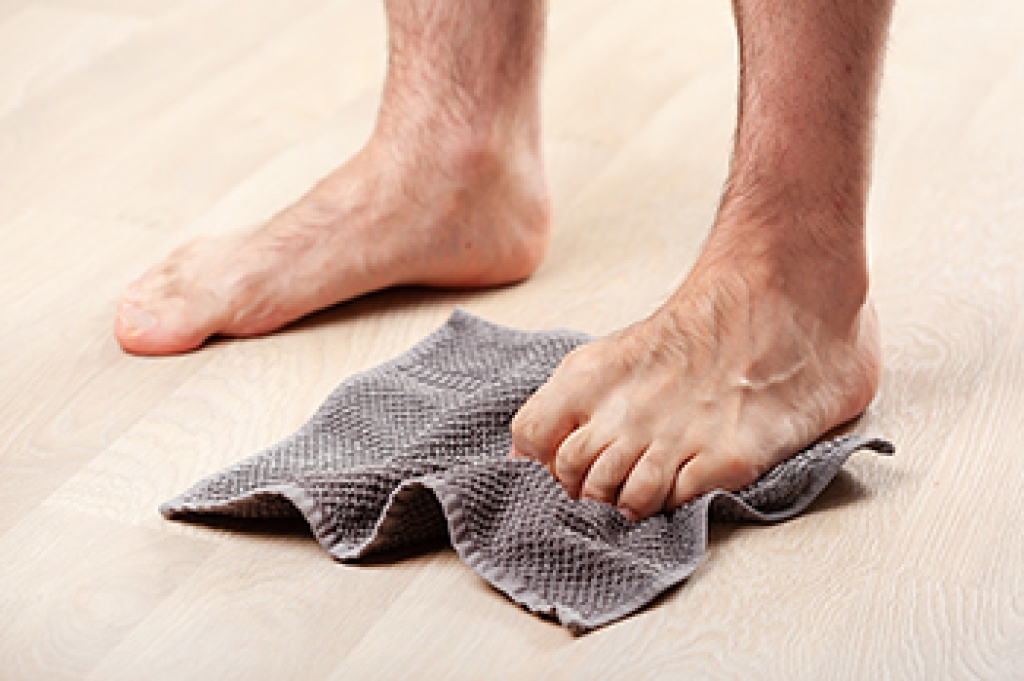
Exercising Your Feet Keeps Them Healthy

Exercising your feet can keep them healthy and in tip-top shape throughout your lifetime. One of the best forms of foot exercise is walking because this activity puts your feet through their entire range of motion. Gentle stretches can help improve the flexibility in your feet at any age, while also keeping them nimble to avoid injury. Strengthening your feet muscles will help you support and protect your feet and can be done with resistance foot exercises using resistance bands or weights. Before you embark on any foot exercise regimen, consult with a podiatrist who can provide specific exercises that will be beneficial, safe, and appropriate for your specific feet and level of fitness.

Exercising your feet regularly with the proper foot wear is a great way to prevent injuries and build strength. If you have any concerns about your feet, contact James P. Huish, DPM from Arizona. Our doctors can provide the care you need to keep you pain-free and on your feet.

Exercise for Your Feet

Exercise for your feet can help you gain strength, mobility and flexibility in your feet. They say that strengthening your feet can be just as rewarding as strengthening another part of the body. Your feet are very important, and we often forget about them in our daily tasks. But it is because of our feet that are we able to get going and do what we need to. For those of us fortunate enough to not have any foot problems, it is an important gesture to take care of them to ensure good health in the long run.

Some foot health exercises can include ankle pumps, tip-toeing, toe rises, lifting off the floor doing reps and sets, and flexing the toes. It is best to speak with Our doctors to determine an appropriate regimen for your needs. Everyone’s needs and bodies are different, and the activities required to maintain strength in the feet vary from individual to individual. 

Once you get into a routine of doing regular exercise, you may notice a difference in your feet and how strong they may become.

If you have any questions, please feel free to contact our office located in Safford and Sierra Vista, AZ . We offer the newest diagnostic and treatment technologies for all your foot care needs.

Read more about Exercise for Your Feet

Should I See a Podiatrist, or Care For Plantar Fasciitis at Home?

Plantar fasciitis, an injury to the ligament that runs along the bottom of the foot, is one of the most frequently diagnosed conditions at the podiatrist’s office. In many cases, conservative treatments are offered to the patient and are typically sufficient for treating the injury. These may include resting and icing the affected foot, wearing more comfortable shoes or orthotics, doing gentle stretching exercises, and taking over-the-counter pain medications. While conservative treatments work for many patients, they aren’t completely effective for everyone. If you have heel pain that is severe enough to stop you from doing your daily activities, gets worse or keeps coming back, or has not improved after two weeks of conservative treatments, it is strongly suggested that you consult with a podiatrist. If you have diabetes, or any tingling or loss of sensation in the foot, it would be wise to seek the care of a podiatrist sooner, rather than later. 

Plantar fasciitis can be very painful and inconvenient. If you are experiencing heel pain or symptoms of plantar fasciitis, contact James P. Huish, DPM  from Arizona. Our doctors can provide the care you need to keep you pain-free and on your feet.

What Is Plantar Fasciitis?

Plantar fasciitis is the inflammation of the thick band of tissue that runs along the bottom of your foot, known as the plantar fascia, and causes mild to severe heel pain.

What Causes Plantar Fasciitis?

  • Excessive running
  • Non-supportive shoes
  • Overpronation
  • Repeated stretching and tearing of the plantar fascia

How Can It Be Treated?

  • Conservative measures – anti-inflammatories, ice packs, stretching exercises, physical therapy, orthotic devices
  • Shockwave therapy – sound waves are sent to the affected area to facilitate healing and are usually used for chronic cases of plantar fasciitis
  • Surgery – usually only used as a last resort when all else fails. The plantar fascia can be surgically detached from the heel

While very treatable, plantar fasciitis is definitely not something that should be ignored. Especially in severe cases, speaking to your doctor right away is highly recommended to avoid complications and severe heel pain. Your podiatrist can work with you to provide the appropriate treatment options tailored to your condition.

If you have any questions, please feel free to contact our office located in Safford and Sierra Vista, AZ . We offer the newest diagnostic and treatment technologies for all your foot care needs.

Read more about Plantar Fasciitis

Reminder: When Was the Last Time...?

Custom orthotics, or shoe inserts, should be periodically replaced. Orthotics must fit properly to give you the best results. Protect your feet and ankles!

Can My Heel Pain Be Caused by a Tumor?

While heel pain is predominantly caused by plantar fasciitis, Achilles tendonitis, flat feet, or by wearing shoes with inadequate cushioning, in rare cases it may be linked to a heel bone tumor. There are several types of heel bone tumors, which are mostly benign. Although some benign tumors in the heel bone are asymptomatic, there may be pain in the heel (which often occurs in the evening), and localized swelling in the ankle. Symptoms may also include heat and redness. Any type of heel pain should be assessed by a podiatrist as soon as possible. They will examine you and may perform an X-ray or other diagnostic imaging to make a proper diagnosis. Early detection and management are essential in yielding the best outcomes in the treatment of any type of heel pain, and particularly in the case of a heel bone tumor.

Many people suffer from bouts of heel pain. For more information, contact James P. Huish, DPM of Arizona. Our doctors can provide the care you need to keep you pain-free and on your feet.

Causes of Heel Pain

Heel pain is often associated with plantar fasciitis. The plantar fascia is a band of tissues that extends along the bottom of the foot. A rip or tear in this ligament can cause inflammation of the tissue.

Achilles tendonitis is another cause of heel pain. Inflammation of the Achilles tendon will cause pain from fractures and muscle tearing. Lack of flexibility is also another symptom.

Heel spurs are another cause of pain. When the tissues of the plantar fascia undergo a great deal of stress, it can lead to ligament separation from the heel bone, causing heel spurs.

Why Might Heel Pain Occur?

  • Wearing ill-fitting shoes                
  • Wearing non-supportive shoes
  • Weight change           
  • Excessive running

Treatments

Heel pain should be treated as soon as possible for immediate results. Keeping your feet in a stress-free environment will help. If you suffer from Achilles tendonitis or plantar fasciitis, applying ice will reduce the swelling. Stretching before an exercise like running will help the muscles. Using all these tips will help make heel pain a condition of the past.

If you have any questions, please feel free to contact our office located in Safford and Sierra Vista, AZ . We offer the newest diagnostic and treatment technologies for all your foot care needs.
Read more about Heel Pain

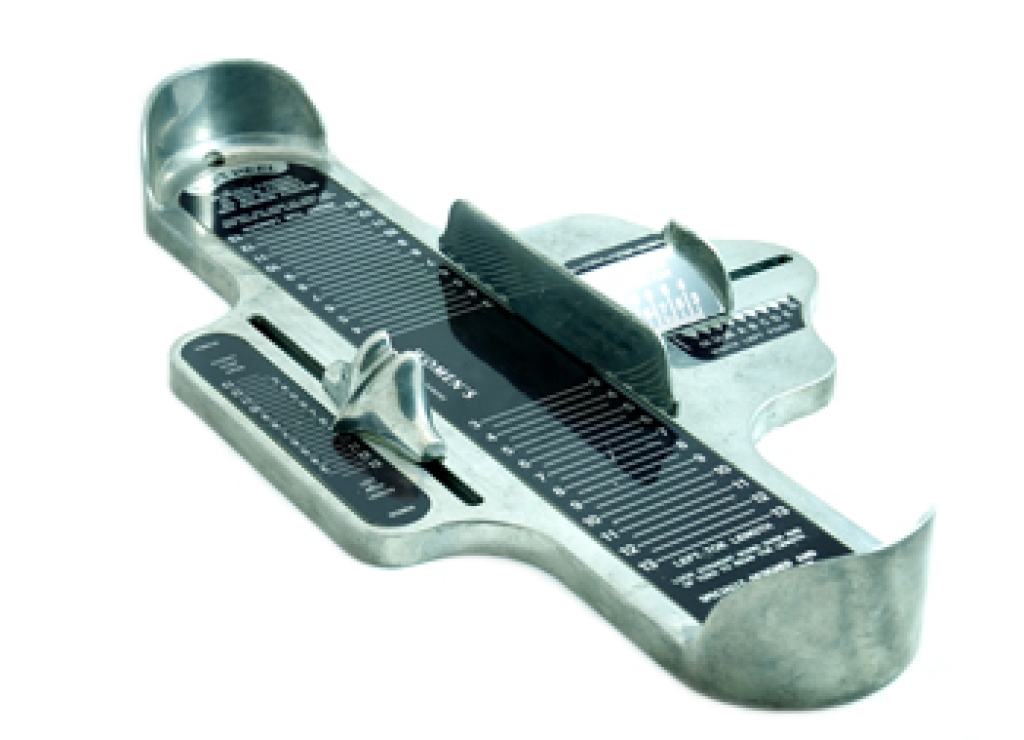
The Brannock Device

If you’ve ever been to a shoe store and had your feet measured, the salesperson likely used a portable metal tool called a Brannock device. This handy item can determine the length and width of your feet, ensuring that you know what size shoes you should be wearing. There are various types of Brannock devices. Some are made specifically for men’s, women’s, or children’s feet. Others are built for sizing specific types of shoes, such as sneakers or ski boots. To find out your shoe size, it is strongly suggested that you go to a store where your feet can be properly measured. Wearing the correct shoe size can significantly benefit your foot health. To learn more about how the fit of your footwear affects your feet, please consult with a podiatrist. 

Getting the right shoe size is an important part of proper foot health. Seek the assistance of James P. Huish, DPM from Arizona. Our doctors will provide the care you need to keep you pain-free and on your feet.

Getting the Right Shoe Size

There are many people who wear shoes that are the incorrect size, negatively affecting their feet and posture. Selecting the right shoes is not a difficult process, so long as you keep several things in mind when it comes to choosing the right pair.

  • When visiting the shoe store, use the tools available to measure your foot.
  • Be sure there is ‘wiggle room’. There should be about an inch between your toes and the tip of your shoes.
  • Do not always assume you are the same size, as manufacturers run differently.
  • Purchase shoes later in the day, as your feet swell as the day progresses.
  • If a shoe is not comfortable, it is not suitable. Most shoes can’t be ‘broken in’, and comfort should be the ultimate goal when it comes to choosing the right pair of shoes

As our feet hold our body weight and keep us moving, it is important to treat them right. Picking the right pair of shoes can provide your feet comfort and mobility without pain.

If you have any questions, please feel free to contact our office located in Safford and Sierra Vista, AZ . We offer the newest diagnostic and treatment technologies for all your foot care needs.

Read more about Getting the Right Shoe Size

Connect With Us

scroll-to-top